
Writing a business plan can feel big, but the part that trips most people up is the objectives section. Everyone knows they need them — yet few know exactly what to write. That’s why searches for examples of business objectives in a business plan keep rising every year. Whether you’re a first-time founder asking investors for money, a student finishing an assignment, or a small business owner planning next year’s growth, you need real, ready-to-use examples that actually work.Startup Funding Options for First-Time Entrepreneurs

This guide gives you more than 50 proven business objectives examples, grouped by category, written in both classic and SMART format, plus free templates you can copy-paste today.
Why Business Objectives Matter in Your Plan
Business objectives are the specific, measurable results you plan to achieve in the next 6–36 months. They turn your big vision into clear targets that employees, investors, and banks can understand.
Good objectives do three things:
- Show investors you have a real roadmap
- Keep your team focused on what matters most
- Let you measure progress and celebrate wins
According to the U.S. Small Business Administration, companies with written business plan goals and objectives are 42% more likely to grow.
How to Write Strong Objectives: Use the SMART Framework
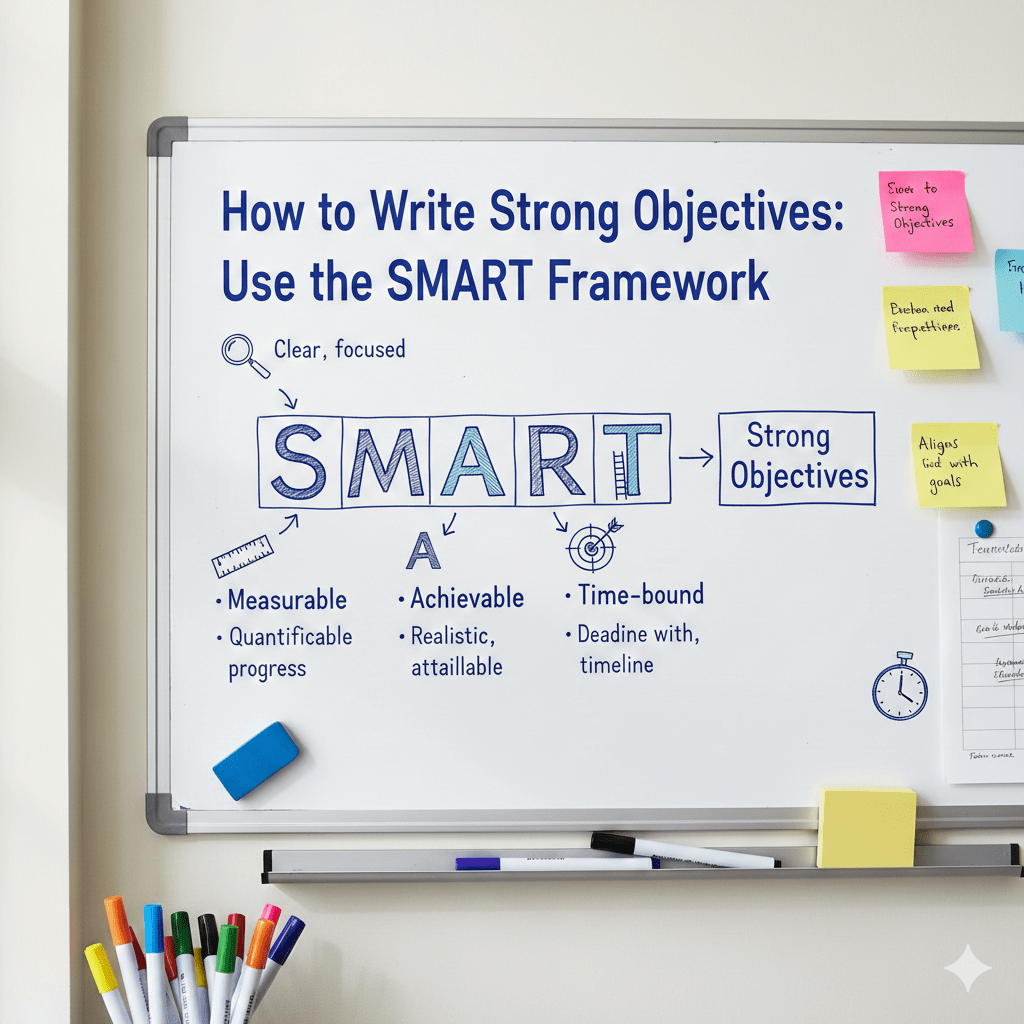
Every strong objective is SMART:
- Specific – clear and narrow
- Measurable – you can track it with numbers
- Achievable – realistic with your resources
- Relevant – supports your bigger mission
- Time-bound – has a deadline
Example:
Bad: “Get more customers.”
Good: “Acquire 500 new paying customers through paid ads and organic content by December 31, 2025.”
40+ Real-World Examples of Business Objectives in a Business Plan
Financial Objectives Examples
- Achieve $1.2 million in annual revenue by end of Year 2.
- Reach break-even point within 14 months of launch.
- Increase gross profit margin from 38% to 52% in the next 18 months.
- Secure $250,000 in seed funding by Q2 2025.How to Write a Business Plan Step-by-Step
- Reduce customer acquisition cost (CAC) from $180 to $110 by December 2025.
Revenue & Sales Business Plan Goal Examples
- Grow monthly recurring revenue (MRR) by 15% month-over-month for the next 12 months.
- Generate $50,000 in sales from a new product line in the first 6 months after launch.
- Increase average order value from $85 to $120 through upselling by Q4 2025.
- Close 20 new enterprise contracts worth at least $25,000 each in 2025.
- Hit $10,000 in monthly e-commerce sales within 90 days of website launch.
Marketing & Customer Acquisition Objectives
- Gain 10,000 email subscribers in the first year through content marketing and lead magnets.
- Achieve 5% website conversion rate on paid traffic by optimizing landing pages (current 2.1%).
- Rank on page 1 of Google for 15 primary keywords by the end of 2025.
- Grow Instagram followers to 25,000 and reach 8% engagement rate within 12 months.
- Run 4 seasonal promotional campaigns that each generate at least $40,000 in revenue.
Customer Service & Retention Objectives
- Reach Net Promoter Score (NPS) of 65+ by Q3 2025.
- Reduce customer churn rate from 9% to under 4% annually.
- Respond to 98% of customer support tickets within 4 business hours.
- Increase customer lifetime value (CLV) from $420 to $700 in 24 months.
- Achieve 85% customer satisfaction rating on post-purchase surveys.
Operational & Process Business Objectives Examples
- Reduce order fulfillment time from 5 days to 48 hours by Q2 2025.
- Implement inventory management software and lower stock-outs to under 2%.
- Hire and onboard 8 new team members by June 2025.
- Move office to a new 3,000 sq ft location by September 2025.
- Achieve ISO 9001 certification within 18 months.
Product Development & Innovation Goals
- Launch Version 2.0 of our mobile app with 3 new core features by July 2025.
- File two new patents for proprietary technology in 2025.
- Reduce product return rate from 6% to under 2% through quality improvements.
- Expand product catalog from 45 SKUs to 120 SKUs by end of Year 1.
- Reach 10,000 active users on the new SaaS platform within 9 months of launch.
Human Resources & Team Objectives
- Achieve 90%+ employee satisfaction score in annual survey.
- Fill all open management positions with internal promotions (50% target).
- Deliver 40 hours of professional training per employee in 2025.
- Reduce employee turnover from 22% to 12% through better benefits and culture programs.
- Implement weekly team-building activities starting January 2025.
Sustainability & Social Impact Objectives
- Reduce company carbon footprint by 30% in three years.
- Source 80% of packaging materials from recycled or biodegradable sources by 2026.
- Donate 5% of annual profits to local education nonprofits.
- Achieve B-Corp certification by the end of 2025.
- Partner with 10 women-owned suppliers in the next 18 months.
Long-Term vs Short-Term Business Plan Key Objectives
| Short-Term (0–12 months) | Long-Term (1–5 years) |
| Reach $500k/month revenue | Reach $5M annual revenue |
| Launch MVP website | Expand to 3 new countries |
| Hire first 5 employees | Build team of 50+ |
| Get 1,000 customers | Reach 100,000 customers |
| Break even | Prepare for Series A funding |
Ready-to-Copy Templates for Your Business Plan
Template 1 – Classic Format
“In [time period], [company name] will [action verb] [key result] by [method] so that [bigger reason].”The Art of the Deal: How to Pitch Your Startup
Example:
“In the next 12 months, GreenLeaf Café will increase average monthly revenue to $75,000 by launching weekend brunch service and local influencer partnerships so that we can open a second location in 2026.”
Template 2 – SMART Format
“We will [action] [measurable result] by [date] measured by [metric].”
Example:
“We will increase website organic traffic by 150% by December 31, 2025, measured by Google Analytics sessions.”
Template 3 – OKR Style (Objectives & Key Results)
Objective: Become the #1 trusted organic skincare brand in the Southeast.
Key Results:
- Reach 20,000 Instagram followers
- Secure shelf space in 50 retail stores
- Hit $1M revenue run-rate
Real Company Examples That Won Funding
- Airbnb (2009 plan): “Host 100,000 nights booked in the first 12 months.” → They hit 1 million in 2 years.
- Buffer (2011): “Reach $10,000 MRR in 9 months → Achieved in 7 months.
- Dropbox early goal: “Get to 100,000 registered users in one year” → Hit 1 million in 18 months.
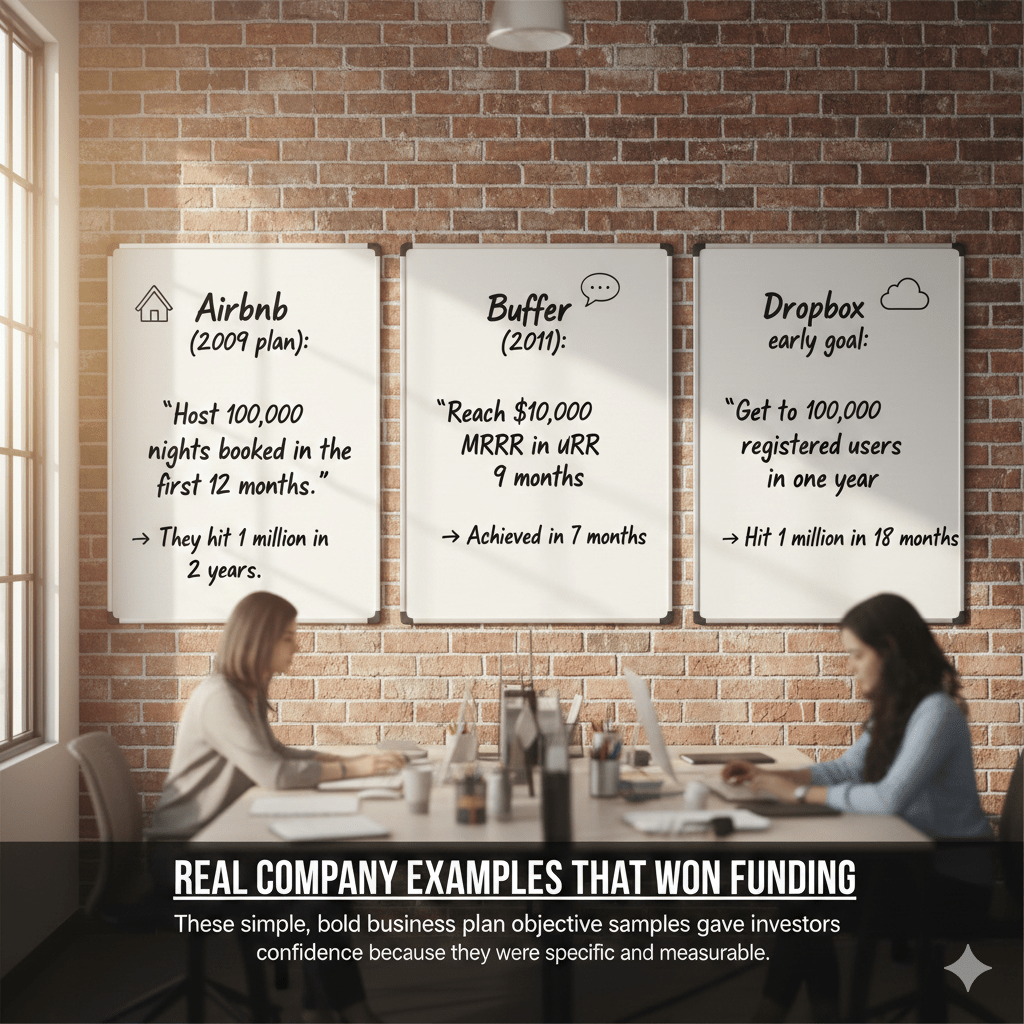
These simple, bold business plan objective samples gave investors confidence because they were specific and measurable.
Common Mistakes to Avoid
❌ Too vague – “Improve sales”
❌ No deadline – “Grow the team someday”
❌ Unrealistic – “Make $10 million in Year 1 with $5k budget”
❌ Too many – More than 5–7 primary objectives dilutes focus
Tip: Pick only 3–5 major strategic business objectives examples for the next 12 months. Everything else becomes supporting tasks.
Frequently Asked Questions
What exactly are business objectives in a business plan?
Business objectives are specific, measurable targets you plan to hit in the next 6–36 months. They show investors, banks, and your team exactly where the company is headed and how success will be measured.
How many objectives should I include in my business plan?
Most winning plans have 4–8 major objectives. More than 10 feels scattered; fewer than 3 looks incomplete.
What’s the difference between goals and objectives?
Goals are broad and inspirational (e.g., “Become the market leader”).
Objectives are narrow and measurable (e.g., “Capture 22% market share by December 2027”).
Should I use SMART objectives or OKRs in my plan?
Use SMART objectives for traditional plans (banks, SBA loans, immigration visas, franchises).
- Use OKRs (Objectives & Key Results) if you’re a tech startup pitching to venture capitalists.
Can you give a quick SMART objective template I can copy?
Yes!
“We will [action verb] [specific result] by [date], measured by [metric].”
Example: “We will increase monthly recurring revenue to $100,000 by December 31, 2025, measured by Stripe dashboard MRR.”
In Conclusion: Start Writing Your Objectives Today
Clear examples of business objectives in a business plan turn dreams into roadmaps. Choose 3–5 that excite you and scare you a little, make them SMART1, and put them where everyone can see them. When your team and your investors can read your objectives in under 30 seconds and instantly understand where the company is going — you’ve won half the battle.
Now it’s your turn. Which objective from the list above fits your business best? Drop it in the comments — I’ll help you make it even stronger2!
References & Further Reading
- [OGS Capital – Goals and Objectives for Business Plan with Examples](https://ogscapital.com/article/goals-and-objectives-for-business-plan-with-examples/] – Excellent templates and 100+ industry-specific examples. ↩︎
- Asana – 15 Great Business Objectives Examples – Clear breakdowns of SMART vs OKR formats. ↩︎

