
Many people mix up invention and innovation. But what’s The Difference Between An Invention And An Innovation? An invention is when you make something new that no one has made before. It is like coming up with a fresh idea or thing. Innovation takes that new thing and makes it useful for people. It puts the idea into real life to help or sell. This guide will help students and new workers see the clear split. You will learn meanings, examples, and why both matter. We use simple words so it is easy to get

Invention vs Innovation: Basic Meanings
An invention vs innovation starts with what each means. Invention means to create a thing that is brand new. It comes from a person’s mind and work. Like when someone thinks of a new tool or way. This step needs lots of tests and tries. It often happens in a lab or home. The goal is to prove it can work. But it may not be ready for everyone yet. Innovation means to take that new thing and change it for the world. It adds value so people want it. This step looks at what buyers need. It makes the thing better or cheaper. Both are key but different. Invention is the start spark. Innovation is the fire that spreads. Without invention, there is no base. Without innovation, the idea stays hidden. Think of invention as the seed. Innovation plants it and grows a tree. This split helps in school and jobs. Students learn this in class to see how ideas turn real.The invention vs innovation gap shows in skills too. Invention needs science know-how. You must know facts and rules. Innovation needs team skills like sales and planning. It mixes many ideas. Invention can be one person’s job. Innovation often needs a group. This makes invention vs innovation clear in steps. First make, then use. Many great things start as inventions but shine as innovation. This base helps you see more.
Difference Between Invention and Innovation Explained
The difference between invention and innovation is big. Invention makes a new item or way. It is the first time it exists. Like drawing a plan for a flying car. But it may not fly yet. Innovation takes that plan and builds a car that works and sells. It fixes problems and adds fun parts. Invention looks at if it can be done. Innovation asks if people will buy it. This difference between invention and innovation matters in life. Invention is fun but risky. Many fail. Innovation checks the market first. It saves time and cash. For example, a new phone screen is an invention. Making it in phones that last longer is innovation. The difference between invention and innovation helps pick paths. If you like to dream, try inventions. If you like to sell, go for innovation. Both push the world forward. But they work hand in hand.Another difference between invention and innovation is where they happen. Invention often in research spots. Like schools or labs. Innovation in firms or shops. It spreads wide. Invention may stay secret at first. Innovation is shared with all. This difference between invention and innovation shows time too. Invention can be a quick flash. Innovation takes years to grow. Know this to plan your work.

Invention and Innovation Definition Made Easy
Let’s look at invention and innovation. Invention is the act of bringing a new thing to life. It is something no one saw before. The invention and innovation definition for invention says it must be fresh and work. Like a new medicine or tool. It comes from hard thinking and tests. Innovation is to use that new thing in a smart way. The invention and innovation definition for innovation means add value. It turns the thing into something people need. Like sell it or make it better. Both definitions link but split. Invention is the birth. Innovation is growth. Students need good invention and innovation definition for tests. It helps answer questions correctly. Pros use invention and innovation definition to plan jobs. Know the words to talk clearly.A strong invention and innovation definition includes examples. Invention like the wheel long ago. Innovation is like putting wheels on cars. This makes invention and innovation definitions stick in mind. Use them in sentences to learn.
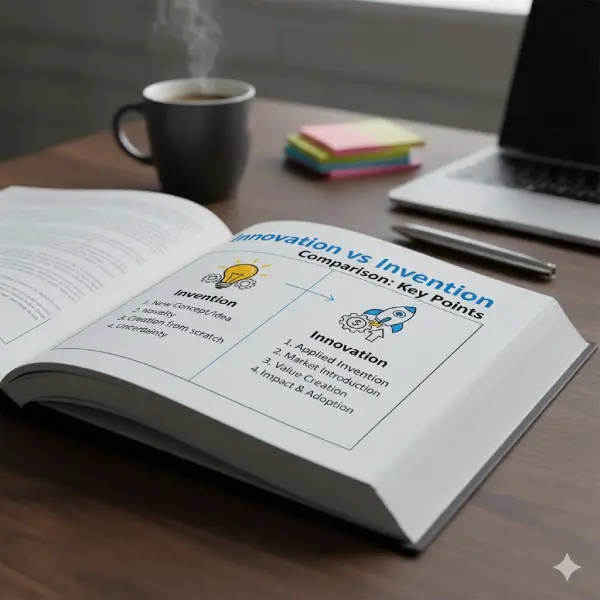
Innovation vs Invention Comparison: Key Points
In an innovation vs invention comparison, see the main splits. Invention creates new things. Innovation applies new. Innovation vs invention comparison shows invention needs science. Innovation needs market knowledge. Invention for one thing. Innovation for many. Innovation vs invention comparison in risk too. Invention has a high chance. Innovation checks first. Use a list to see clear:
- Invention: New idea birth.
- Innovation: Idea to market.
- Invention: Lab work.
- Innovation: Team sales.
- Invention: Prove works.
- Innovation: Make money.
- Invention: One person ok.
- Innovation: Group needed.This innovation vs invention comparison helps study. It shows how they fit together. Without one, the other is hard. Innovation vs invention comparison in time: Invention fast or slow. Innovation ongoing.
Invention and Innovation Examples from Real Life
Look at invention and innovation examples. The light bulb is a good one. Thomas Edison made the first good bulb. That is an invention. Then firms made it cheap and safe for homes. That is innovation. Another invention and innovation example is the phone. Bell made the first call. Invention. Then Apple made smart phones with apps. Innovation. Invention and innovation examples help see the jump. Like the internet. First made for sharing data. Invention. Now we shop and chat on it. Innovation. More invention and innovation examples: Penicillin found by Fleming. Invention. Then made into pills for all. Innovation. These invention and innovation examples show value add. Invention solves one problem. Innovation solves many. Use invention and innovation examples to teach. They make ideas real.One more invention and innovation example: The zipper. First made for boots. Invention. Then used in clothes and bags. Innovation. This shows spread.
Meaning of Invention and Innovation in Simple Words
The meaning of invention and innovation is key. Invention means to make something totally new. It is the first step in change. The meaning of invention and innovation for invention is to create fresh. Like thinking up a new game. Innovation means to take that new and make it work for people. The meaning of invention and innovation for innovation is use smart. Like sell the game to kids. Both meanings help growth. Meaning of invention and innovation in school: Learn to think new and act. In jobs: Make cash from ideas. Know the meaning of invention and innovation to avoid mix up. Invention does not always sell. Innovation always aims to.Clear meaning of invention and innovation includes why. Invention for fun or fix. Innovation for need and win.
Invention and Innovation in Business
Invention and innovation in business drive win. Firms need new things to stay top. Invention and innovation in business start with research. Make new products. Then sell them smartly. Like Apple invents tech. Then innovates to make cool phones. Invention and innovation in business help make money. Stats show innovative firms grow 2 times faster. In 2025, AI is big for both. Invention and innovation in business need cash. Spend on labs and teams. Without invention and innovation in business, firms fall back. Examples like Netflix. Invent stream. Innovate to beat TV. Invention and innovation in business are key for jobs too. Create new roles.Good invention and innovation in business plan ahead. See what buyers want.
Invention and Innovation in Economics
Invention and innovation in economics boost growth. They make more jobs and cash. Invention and innovation in economics help countries win. Like the US with tech. Invention brings new tools. Innovation sells them world wide. Invention and innovation in economics change markets. Make old things cheap. New things are hot. Stats: Innovation adds 85% to growth. In 2025, green tech will be big. Invention and innovation in economics need rules. Like patents to protect. Without invention and innovation in economics, slow down. Examples: Steam engine changed work. Now AI does the same.Invention and innovation in economics link to trade. Sell new to other lands.
Invention vs Innovation Explained Step by Step
Invention vs innovation explained in easy steps. First, inventions: Think of new ideas. Test if it works. Get a patent. Second, innovation: See if people need it. Make it better. Sell it. Invention vs innovation explained shows invention alone not enough. I need both to win. Invention vs innovation explained with risks. Invention may fail a test. Innovation may not sell. Invention vs innovation explained helps choose. Like being an inventor or a business person. Invention vs innovation explained in class: Use charts. At home: Try small ideas.Full invention vs innovation explained: Start small, grow big.
Invention and Innovation Concepts for Beginners
Invention and innovation concepts are base ideas. Invention concept: New from nothing. I need a creative mind. Invention and innovation concepts for innovation: Add to old. I need a smart plan. Both concepts use think. Invention and innovation concepts include types. Like products or processes. Invention and innovation concepts help learn. See how the world changes. Beginners start with invention and innovation concepts. Draw mind maps. Invention and innovation concepts link to solve problems.Key invention and innovation concepts: Value and new.
New Idea Creation in Invention
New idea creation is the heart of invention. It starts with a problem. Think of ways to fix it. New idea creation needs a free mind. No limits at first. New idea creation can come from play or work. Like kids think wild. New idea creation leads to tests. See if it’s real. New idea creation is fun but hard. Many tries fail. Keep going. New idea creation in teams is better sometimes.
Commercialization of Ideas Through Innovation
Commercialization of ideas turns to cash. Take inventions and sell them. Commercialization of ideas needs a plan. Know buyers. Commercialization of ideas adds ads and makes. Commercialization of ideas makes jobs. Like starting a firm. Commercialization of ideas risks money. But a big win is good. Commercialization of ideas in 2025 uses the web.
Product Development: From Invention to Innovation
Product development links both. Start with an invention idea. Build model. Product development then tests with people. Change for the better. Product development ends with sales. Innovation part. Product development needs time and team. Product development uses tools like 3D print. Product development key for new things.
Research and Development (R&D) Role
Research and development (R&D) is where invention lives. Spend time finding new things. Research and development (R&D) tests safe. Research and development (R&D) leads to patents. Then innovation takes over. Research and development (R&D) costs but pays back. Firms spend 5% on it. Research and development (R&D) in schools too.
Value Creation in Innovation
Value creation is why innovation wins. Make things worth more. Value creation for users and firms. Value creation like adding fun or saving time. Value creation checks what is needed. Value creation grows the economy. Value creation examples: Apps save steps.
Technological Advancement Driven by Both
Technological advancement comes from invention and innovation. New tech from invention. Spread from innovation. Technological advancement like AI now. Technological advancement changes life. Technological advancement needs both steps. Technological advancement fast in 2025.
Creativity and Problem Solving
Creativity and problem solving key for both. Think new to fix. Creativity and problem solving in invention are wild. In innovation, smart. Creativity and problem solving are taught in school. Creativity and problem solving make a better world. Creativity and problem solving are used every day.
Business Application of Ideas
Business application of ideas is the innovation side. Take inventions to shop. Business application of ideas, plans, price and sell. Business application of ideas sees trends. Business application of ideas helps start ups. Business application of ideas is big in the economy.
what’s The Difference Between An Invention And An Innovation With Examples
Now deep on what’s The Difference Between An Invention And An Innovation with examples. Invention: Make new wheels. No one had. Innovation: Put on a bike for speed. What’s The Difference Between An Invention And An Innovation: One creates, one uses. Example: Morse code invention. Then radio innovation. What’s The Difference Between An Invention And An Innovation: Risk and sell. Dyson vacuum invention cyclone. Innovation no bag sell hit. What’s The Difference Between An Invention And An Innovation: Lab vs market. Microprocessor invention Intel. Innovation in PCs. This shows clearly.
Difference Between Invention and Innovation in Business Studies
The difference between invention and innovation in business studies teaches key. Invention of a new product. Innovation sells it. Difference between invention and innovation in business studies in books. Learn for tests. Difference between invention and innovation in business studies examples like the iPhone. The difference between invention and innovation in business studies helps plan firms1.
Invention vs Innovation Examples for Students
Invention vs innovation examples for students: Bulb invention. LED innovation. Easy. Invention vs innovation examples for students: Web invention. Social media innovation. Invention vs innovation examples for students: Vaccine invention. Mass make innovation. Invention vs innovation examples for students help learn.
Invention and Innovation Difference in Economics
Invention and innovation difference in economics: Invention adds know. Innovation adds cash. Invention and innovation difference in economics growth. Invention and innovation difference in economics jobs. Invention and innovation difference in economics trade2.
FAQs About what’s The Difference Between An Invention And An Innovation
What is The Difference Between An Invention And An Innovation in basic terms?
What’s The Difference Between An Invention And An Innovation is invention makes new things for the first time. Innovation takes it to people for use and buy. Invention like dreaming up a new bike. Innovation makes it safe to sell in shops. This split helps see how ideas become real stuff. Invention needs thought and testing. Innovation needs a plan and market. Both are good for growth.
How do invention and innovation examples show the difference?
Invention and innovation examples like the bulb by Edison are inventions. Then making it for all homes is innovation. Phone by Bell invention. Smart phone by Apple innovation. These shows invention start, innovation finish. Vacuum no bag invention. Sell big innovation. Use examples to learn fast. They make concepts stick. See in life every day.
Why study the difference between invention and innovation in business studies?
Difference between invention and innovation in business studies helps know how firms win. Invention gives a new edge. Innovation makes cash flow. In class, it preps for jobs. Know to start your own biz. It teaches team work too. See risks and wins. Good for tests and real.
What is an invention vs innovation exam question like?
Invention vs innovation exam question asks to define and differ. Like list three splits. Or true false: Invention always sells. False. Prep with examples. Know meanings. Use tables. Practice makes passing easy. Questions test deep knowledge.
How does invention differ from innovation help pros?
How invention differs from innovation shows pros where to focus. If you like new things, do inventions. If you like to sell, do innovation. Helps plan a career. See team needs. Know risks. Use in meetings. Builds strong firms.
Conclusion: Key Take on what’s The Difference Between An Invention And An Innovation
To wrap, what’s The Difference Between An Invention And An Innovation is create new vs make useful. Invention starts ideas. Innovation brings to life and market. Both drive change and growth. Use examples like bulb or phone to see.3 In 2025, they key for tech and jobs. This guide gives a clear view for students and pros. What new idea will you invent or innovate next?
References
- UK CPI Blog – Details commercial side with stories like Dyson vacuum ↩︎
- Tutor2u Economics Reference – Covers differences in economics context with cases like iPhone. ↩︎
- Digital Leadership Blog – Explains invention as creation and innovation as application with examples like light bulbs. ↩︎

