
When you face the question All Of The Following Are True About Innovation Except on a test, it tests your grasp of core ideas. This phrase often appears in multiple-choice formats to spot the false statement among true ones. Innovation drives business and change by bringing fresh ideas to life. It involves new products, methods, or services that add value. Students need to know true facts to pick the wrong one. This article breaks it down simply for learners. You will find explanations, examples, and tips to ace your quizzes.
What Is the Innovation Definition?
Experts define innovation as the act of turning ideas into something useful that creates value. You introduce new methods, products, or ways to solve problems. The innovation definition focuses on making things better or different in a positive way. It goes beyond just inventing; it must work in real life. For example, a new app that helps people shop faster fits the innovation definition. Businesses use innovation to stay ahead. The innovation definition includes both big changes and small improvements. Think of it as creative problem solving that leads to growth. Without value, it’s not true innovation. The innovation definition helps students understand exam questions.Many sources agree on this core idea. Innovation starts with an idea but ends with action. It can happen in tech, business, or daily life. The innovation definition stresses practicality over just being new. Old ideas can become innovations if applied fresh. This makes the innovation definition broad yet focused. Learners grasp it by seeing real cases.
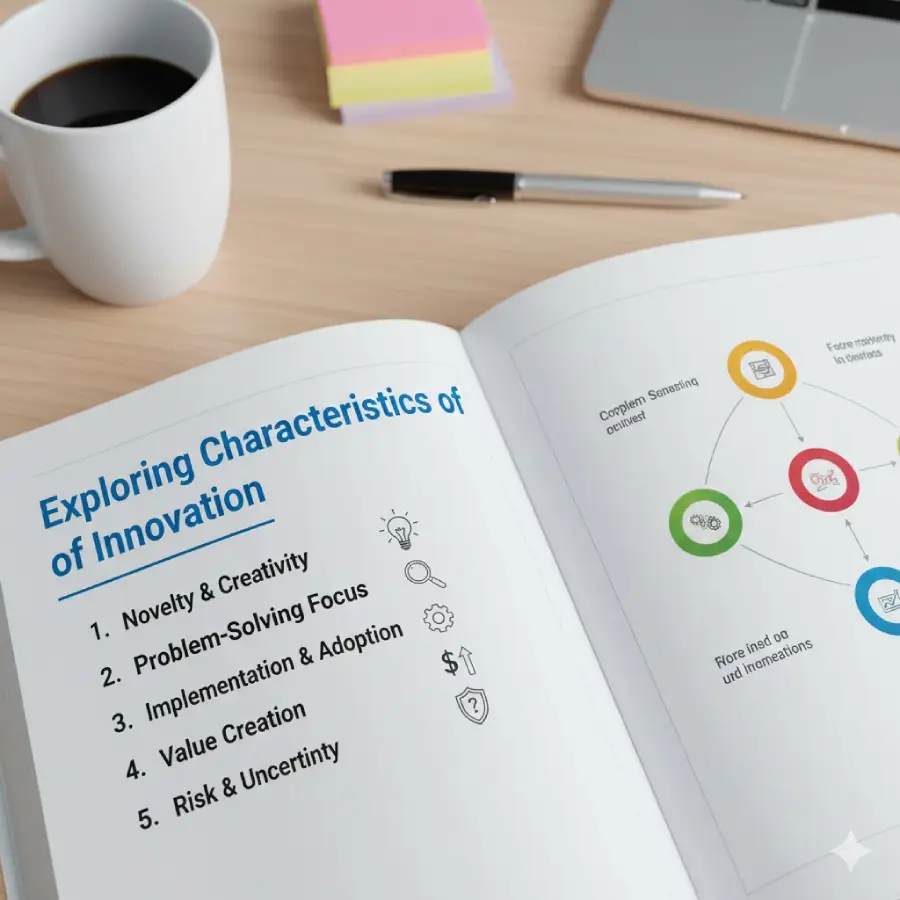
Exploring Characteristics of Innovation
Innovation shows key traits that make it stand out. First, it creates value for users or businesses. Second, it involves novelty or newness in some way. Third, it often requires risk-taking to try untested ideas. The characteristics of innovation include being adaptable to changes. It drives competition and growth in markets. Another trait is its ability to spread and influence others. The characteristics of innovation help spot true statements in tests.Creativity plays a big role in these traits. Innovation solves problems in unique ways. It can be simple or complex but always aims for improvement. The characteristics of innovation link to success in entrepreneurship. Without these, ideas stay as thoughts. Students learn the characteristics of innovation to answer quiz questions correctly. Examples show how these traits work in practice.Risk is part of the characteristics of innovation. Not all tries succeed, but learning from failures helps. It encourages teamwork and sharing ideas. The characteristics of innovation make it exciting for learners. Knowing them builds confidence for exams.
Types of Innovation: Sustaining vs Disruptive
Innovation comes in different forms. Sustaining innovation improves what exists already. It meets current needs by making products better. For instance, faster phone processors are sustaining. Disruptive innovation shakes up markets by creating new ones. It starts simple but grows big. Examples include streaming services changing TV. Both types matter in business.Sustaining keeps companies strong in their field. It focuses on existing customers. Disruptive targets new groups or underserved ones. The iPhone disrupted phones and music. In 2025, AI tools disrupt jobs and tasks. Understanding types helps with innovation concepts in business. Students see how they fit in entrepreneurship.More on sustaining: It builds on success step by step. Car makers add safety features as sustaining. Disruptiveness often comes from outsiders. Netflix disrupted video rentals. Types show innovation’s range. This knowledge aids in innovation quiz questions.
Innovation Multiple Choice Questions for Practice
Try these innovative multiple choice questions. What is innovation? A) New ideas creating value. B) Copying others. C) Staying the same. Answer A. Innovation multiple choice questions make learning fun. Which is sustaining? A) Better batteries. B) New market entry. Answer A. Use innovation multiple choice questions to test knowledge.Disruptive example? A) Streaming vs DVD. B) Faster cars. Answer A. Innovation multiple choice questions cover basics. True or false: Innovation only for big firms. False. Small ones innovate too. Practice innovation multiple choice questions daily.More: Innovation in entrepreneurship means? A) Starting new. B) Risk avoidance. Answer A. Innovation multiple choice questions prepare for tests. What characteristics? A) Value creation. B) Stagnation. Answer A.

Innovation True or False Questions to Test Knowledge
Use innovation true or false questions for quick checks. Innovation creates value: True. It always works the first time: False. Innovation true or false questions highlight myths. Disruptive changes markets: True. Only tech is innovation: False. Answer innovation true or false questions to build basics.Sustaining improves current: True. Innovation no risk: False. Innovation true or false questions suit beginners. It needs ideas: True. No team needed: False. Repeat innovation true or false questions for retention.Organizational innovation changes processes: True. Incremental same as disruptive: False. Innovation true or false questions clarify concepts.
Innovation Concepts in Business
Business uses innovation concepts in business to grow. It leads to new products and better services. Companies like Apple thrive on it. Innovation concepts in business include planning and execution. They drive profits and jobs. In 2025, 77% of firms explore AI for innovation. Innovation concepts in business link to strategy.Entrepreneurs apply innovation concepts in business. They spot opportunities. Stats show innovative firms grow faster. Investment in AI hit $33.9 billion. Use innovation concepts in business for competitive edge. Students learn them for careers.More: Innovation concepts in business cover types and traits. They help in management. Examples guide understanding.
Innovation in Entrepreneurship: Why It Matters
Innovation in entrepreneurship sparks new ventures. Entrepreneurs use ideas to start businesses. It solves market gaps. Innovation in entrepreneurship builds success stories. Think Uber changing rides. In 2025, startups focus on green tech. Innovation in entrepreneurship needs courage.It involves risk but rewards big. Innovation in entrepreneurship teaches adaptability. Small ideas grow large. Students study innovation in entrepreneurship for inspiration. It creates jobs and wealth.Funding aids innovation in entrepreneurship. VCs back fresh ideas. Examples motivate learners.
Fundamentals of Innovation for Beginners
Grasp fundamentals of innovation. Start with ideas. Turn them into action. Fundamentals of innovation include creativity and testing. Value is key. Fundamentals of innovation apply everywhere. Beginners learn step by step. Fundamentals of innovation build strong base.Examples help. Fundamentals of innovation stress practice. Avoid common errors like no plan.Learn innovation basics for students. It’s new ways that help. Innovation basics for students cover definitions and types. Use simple examples. Innovation basics for students prepare for quizzes. Start small. Innovation basics for students make learning easy.Projects teach innovation basics for students. Think like entrepreneurs.
New Ideas and Methods in Innovation
Innovation brings new ideas and methods. They solve old problems fresh. New ideas and methods create products. Businesses need them to evolve. New ideas and methods drive tech advances. Examples include apps and tools. New ideas and methods spark change.Brainstorm for new ideas and methods. Share in teams.Business innovation concepts guide firms. They include process changes. Business innovation concepts boost efficiency. Use for growth. Business innovation concepts link to markets. Study cases. Business innovation concepts help in exams.
Product and Process Innovation
Product and process innovation differ. Product makes new items. Process improves making. Both add value. Product and process innovation in firms. Cars get better engines: product. Faster assembly: process. Product and process innovation key for success.
Creative Problem Solving Through Innovation
Creative problem solving uses innovation. Find unique fixes. Creative problem solving needs thinking outside the box. It leads to breakthroughs. Creative problem solving in daily life. Students practice it. Creative problem solving builds skills.Technological advancement fuels innovation. New tech creates opportunities. Technological advancement like AI changes work. In 2025, it’s key. Technological advancement speeds progress. Learn about it. Technological advancement examples abound.
Organizational Innovation Strategies
Organizational innovation changes how firms work. New structures or cultures. Organizational innovation improves teams. It adapts to change. Organizational innovation boosts morale. Examples include flexible hours. Organizational innovation for long term.Incremental vs disruptive innovation: Incremental small steps. Disruptive big shifts. Incremental vs disruptive innovation both needed. Cars safer: incremental. Electric cars: disruptive. Incremental vs disruptive innovation in markets. Choose based on goals. Incremental vs disruptive innovation teaches balance.
Innovation Theory Overview
Innovation theory explains how it happens. Schumpeter’s creative destruction. Innovation theory guides practice. It covers diffusion. Innovation theory for students. Read basics. Innovation theory evolves.Management innovation changes leading. New ways to organize. Management innovation improves decisions. Examples like agile. Management innovation in firms. It helps growth. Management innovation key today.
Innovation Examples in Business
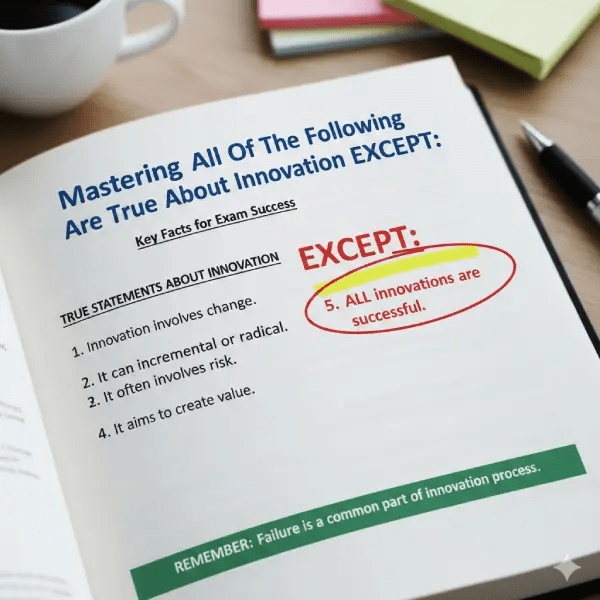
See innovation examples in business. Apple iPhone disrupted. Innovation examples in business like Netflix. Pfizer vaccines sustaining. Innovation examples in business inspire. Amazon delivery. Innovation examples in business show impact.For All Of The Following Are True About Innovation Except answer, find the false. Often “innovation always succeeds”. All Of The Following Are True About Innovation Except answer in sources is d. Since all is true. All Of The Following Are True About Innovation Except answer tricks you. Practice to know. All Of The Following Are True About Innovation Except answer helps tests.
FAQs About All Of The Following Are True About Innovation Except
What does All Of The Following Are True About Innovation Except mean in quizzes?
The phrase All Of The Following Are True About Innovation Except asks you to find the one false statement among options. It tests if you know real facts about innovation. For example, true ones include creating value and improving products. The false might say innovation has no risks. This format appears in business exams to check understanding. Practice by listing true traits first. Then spot the odd one out. It builds skill for tests.
How can I prepare for All Of The Following Are True About Innovation Except mcq?
To prepare for All Of The Following Are True About Innovation Except mcq, start with basic definitions. Learn types like sustaining and disruptive. Use examples to remember. Review innovation true or false questions daily. Make flashcards for characteristics. Join study groups to discuss. Take online quizzes for practice. This way, you spot false statements fast1.
What are common false statements in All Of The Following Are True About Innovation Except explanation?
Common false statements in All Of The Following Are True About Innovation Except explanation include “innovation always succeeds”. Many fail but teach lessons. Another is “it’s only about technology”. It can be processed too. “No risk involved” is wrong. Risk is key. “Only for large companies” is false; small ones innovate. “It’s the same as invention” not true; innovation applies ideas. Use these to study.
Why study All Of The Following Are True About Innovation Except answer?
Study All Of The Following Are True About Innovation Except answer to master exam tricks. It helps distinguish facts from myths. You learn core concepts deeply. This boosts scores in business studies. It prepares for the real world too. Innovation matters in jobs. Knowing answers builds confidence. Practice leads to better grades.
What tips for innovation quiz questions involve except?
For innovation quiz questions with exceptions, read all options first. Mark true ones. The left is false. Recall definitions. Use examples to check. Don’t rush. Double-check. Practice a lot to get fast. This works for management tests.
Conclusion: Wrapping Up All Of The Following Are True About Innovation Except
To sum up, All Of The Following Are True About Innovation Except helps spot false ideas in quizzes. Innovation creates value through new methods and ideas2. Types like sustaining and disruptive drive business. Characteristics include creativity and risk. Use practice questions to prepare. Stats show its importance in 2025. This guide gives tools for success. What false statement about innovation have you seen in your studies?
References
- Brainly Question – Community explanations for innovation quiz questions. ↩︎
- Chegg Homework Help – For multiple-choice questions and answers on innovation topics. ↩︎
